
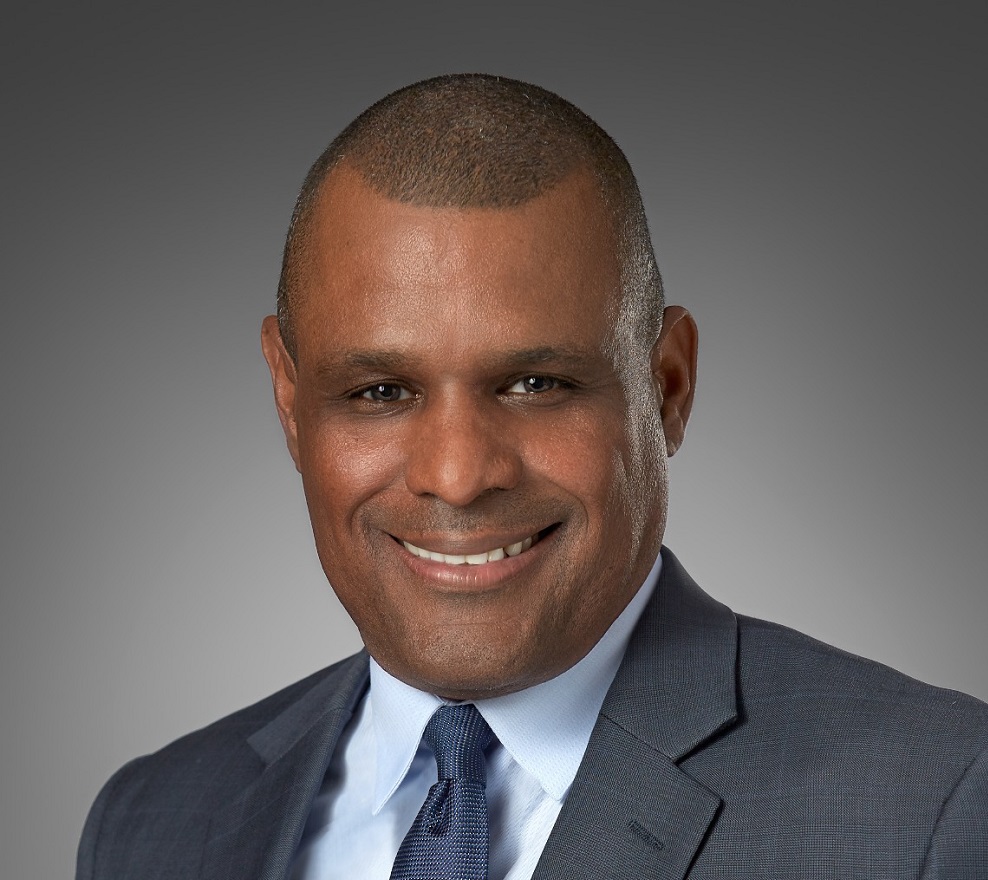

With a strong track record in telecommunications, media, and technology innovation, Stephen Thomas, Chairman & CEO of TPT Global Tech, joins Teletimes for an inspiring talk on innovation, entrepreneurship, and meaningful perspectives on digital inclusion and revenue-generation
TT: Congratulations on being invited to join the SAMENA Telecommunications Council. How does it feel to be contributing to a regional dialogue on digital development at this point in time?
ST: It’s an honor and a humbling experience. Being invited to contribute to the regional dialogue through SAMENA Council gives me a meaningful opportunity to share insights, especially since my journey into telecom has not been a traditional one, and TPT Global Tech – our company – has also followed a somewhat similar path.
TT: In the interest of a very large youth population in this region, can you walk us through your entrepreneurial journey?
ST: More than 25 years ago, I was working between New York and Miami as an aspiring film director and producer, focused on storytelling and the arts. Eventually, life took me to San Diego, and at age 35, I entered the telecom industry with no formal background. I joined the eighth-largest telephone company in the U.S. at the time, which also happened to be the largest privately owned telecom firm globally, with 27 subsidiaries. I served as Director of Validation, managing more than $500 million annually and overseeing call data records from over 270 carriers.
Two years later, I started my entrepreneurial journey, setting up my first telecom business. We focused on terminating operator-assisted calls into the U.S. from El Salvador, Guatemala, Mexico, and Honduras, among others. On a visit to an ISP in Guatemala, I came across a two-port analog VoIP ATA. At the time, most telecom operations still depended on expensive class-five switches, many owned or partially controlled by national governments. This small device allowed voice services to be delivered over the internet.
TT: That was a turning point?
ST: Absolutely. I realized that if we could compress VoIP traffic using Cisco routers on one end and decompress it on the other, we could also extract raw call detail records directly from those routers—bypassing traditional switches. Within three weeks, our engineers developed our first VoIP CDR system. That became the foundation of Vivoware, a SaaS platform that enabled local ISPs to become telecom operators. They could install ATAs at customer locations, create billable records, and invoice both retail and business clients—all without owning a class-five switch. In 2002, Internet Telephony Magazine named it Product of the Year in the U.S.
TT: What has been the guiding principle behind your work?
ST: The idea of driving revenue growth while expanding digital access has been central to everything I’ve done. Over the years, I’ve seen several shifts in the Telecoms/ICT industry. VoIP removed the need for expensive hardware. SIP protocols transformed how data moved globally. Softswitches gave engineers the ability to launch networks. Later, smartphones shifted influence from infrastructure providers to data platforms and apps—creating today’s tech giants. These changes have created opportunities, but they’ve also increased inequality in access to digital tools and services – now, almost forcing telecom operators to reassert themselves through transformed business models.
TT: You saw this shift coming?
ST: Back then, I traveled globally with a Cisco 5300 router, telling telecom leaders that the future would be shaped by data, not hardware. We experimented with adding video cards to routers, predicting that people would stream TV, bank, send money, and manage their lives from mobile devices. I also warned that the companies moving data would eventually be surpassed by those aggregating and monetizing it. That’s exactly what happened—the biggest companies today are not infrastructure owners but data-centric platforms.
TT: Given what has now happened, and which has created altogether new ecosystems, what should telcos and governments focus on, especially in this part of the world?
ST: It’s time for collaboration, partnerships, and being much more closely-aligned together to embrace changes within the industry and adjacent to it. The changes we’ve seen weren’t planned—they were the result of technology evolving faster than policy and infrastructure. But they also show what’s possible if telecom operators, governments, and technology platforms work together. That’s where “super apps” come in.
TT: How do you define a super app?
ST: A super app brings together services like communication, commerce, finance, entertainment, education, healthcare, and public engagement into one mobile-first platform. For operators, it creates new ways to earn beyond voice and data. For governments, it provides a tool to reach and support people who don’t have regular access to services. For users, it offers access to the digital economy, including opportunities to earn and learn. And for nations, super apps offer a way to accelerate progress on the SDGs.
TT: Your company TPT Global Tech has built a super app—can you tell us about it?
ST: Yes, we’ve spent the last seven years developing VuMe, which is designed for underserved and emerging communities. VuMe includes livestreaming, video-on-demand, eCommerce, mobile wallet, messaging, rewards, remittance, jobs, education, and even digital banking. All of this works in low-bandwidth environments, including 2G and 3G, where most mainstream apps struggle.
TT: What kind of business case does this “super app model” present to telecom operators?
ST: Let’s say a mobile operator has 100 million subscribers. If just 10% use a super app like VuMe and the operator earns $1 per active user per month, that’s $10 million monthly—$120 million a year. This can directly offset the cost of building out infrastructure in rural or difficult-to-reach areas. Those same areas then become revenue-generating regions through the app.
VuMe also allows for additional monetization through services like mobile TV, livestreaming, eCommerce, P2P payments, microloans, crypto wallets, and even investment platforms. Each of these creates new revenue streams. Think of a farmer in Nigeria sharing tutorials via livestream, a teacher in Bangladesh selling online lessons, or an artist in Egypt running virtual concerts. These are new forms of income for users—and new business for operators and governments.
TT: What role do governments have to play in all of these contexts?
ST: Governments can use super apps as digital public infrastructure. They enable delivery of emergency alerts, remote healthcare, digital ID, secure voting, and welfare payments. All without the cost of laying physical infrastructure. It’s a way to connect and empower citizens efficiently. In this part of the world – that is the SA-ME-NA region – where governments are particularly pushing to make progress on national ICT visions, the ability to leverage super apps for public good provides a great complement to their digital initiatives.
TT: So, you are saying there exist policy-level opportunities here, too?
ST: Yes, precisely. This approach supports national broadband goals, inclusion policies, and ESG strategies. Regulators can help by offering data subsidies, reduce taxes and fees for operators, or offer favorable spectrum terms to companies that adopt these models. Everyone benefits: governments meet public service goals, operators grow their businesses, and users gain meaningful access to connectivity and digital services.
TT: What’s required to make this work on a larger scale?
ST: In my opinion, super apps may very well become foundation of a new kind of ecosystem—but they must be designed for the realities of the users, especially of the regions of the Middle East and Africa. That means multilingual support, low data consumption, cultural orientation, sensitivity to social conventions, and strong privacy. Operators should see super apps as a way to grow together – together among themselves, with their partners, and with the end-users. This would be a sustainable approach to transforming the telco business. Governments, too, need to create frameworks that support responsible innovation, incentivized entrepreneurship, and ensure broad, affordable access to digital possibilities.
TT: As an entrepreneur, what drives you today, after all these years in the field?
ST: Whether through film or telecom, I’ve always wanted to create platforms to help people share their stories and access opportunities. Today, that platform is digital. The future of telecom growth won’t come just from selling more data—it will come from enabling people to create, earn, and participate in this new, digital environment. That’s what digital equity means. With the right partnerships, super apps can help us achieve it, while also taking revenue-generation into a new business realm.
TT: In view of all this, what is TPT Global Tech’s current objectives?
ST: TPT Global Tech would like to work with operators in this region. For this, we invite all operators or all profiles to explore the VuME innovative proposition. Our proposition is built both on value-creation as well as revenue-generation. VuME has a strong case for the emerging markets of this region.