

By Gulraiz Khalid Khan
Xi’an has always been known as one of China’s great historical capitals. Today, however, the city is also becoming a showcase for something entirely different: how artificial intelligence, multimodal large language model (LLM), cloud computing and 5G-Advanced (5G-A) can work together to preserve cultural heritage while simultaneously transforming the visitor experience.
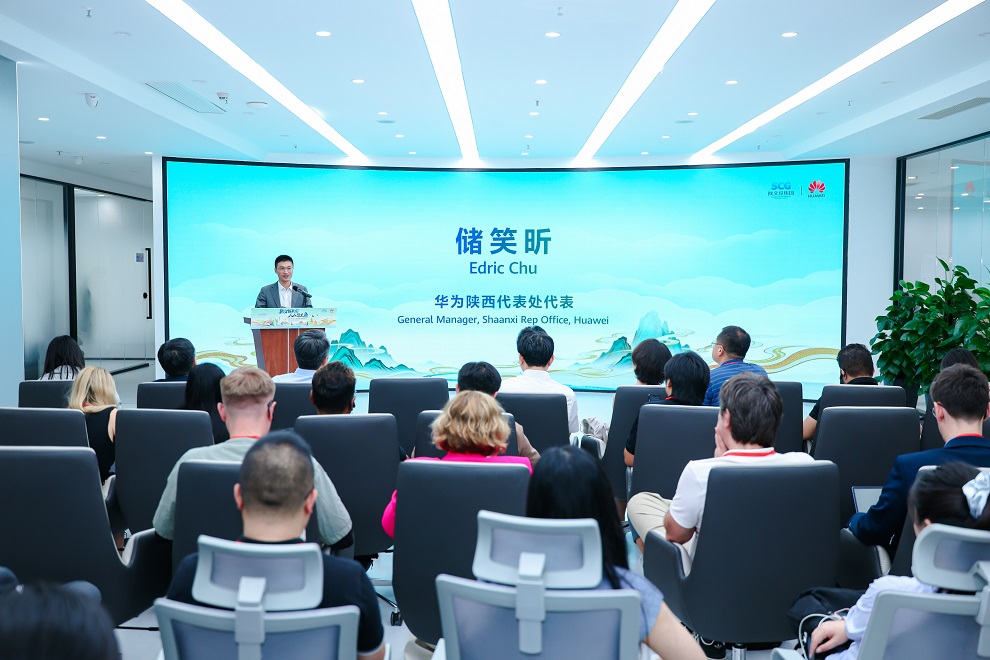
During a recent media tour organized by Shannxi Culture Industry Investment Group (SCG) and Huawei in Xi’an, Teletimes had the opportunity to experience first-hand several real-world deployments spanning AI-powered tourism, digital heritage preservation, intelligent airports and high-capacity 5G-A networks. Rather than presenting isolated technology demonstrations, Huawei and its ecosystem partners showcased how multiple technologies can be integrated into an end-to-end digital platform that benefits governments, tourism authorities, businesses and visitors alike.
AI Built Specifically for Cultural Tourism
At the heart of the initiative is BoGuan, developed Shaanxi Culture Industry Investment Group (SCG) based on Huawei’s technology.
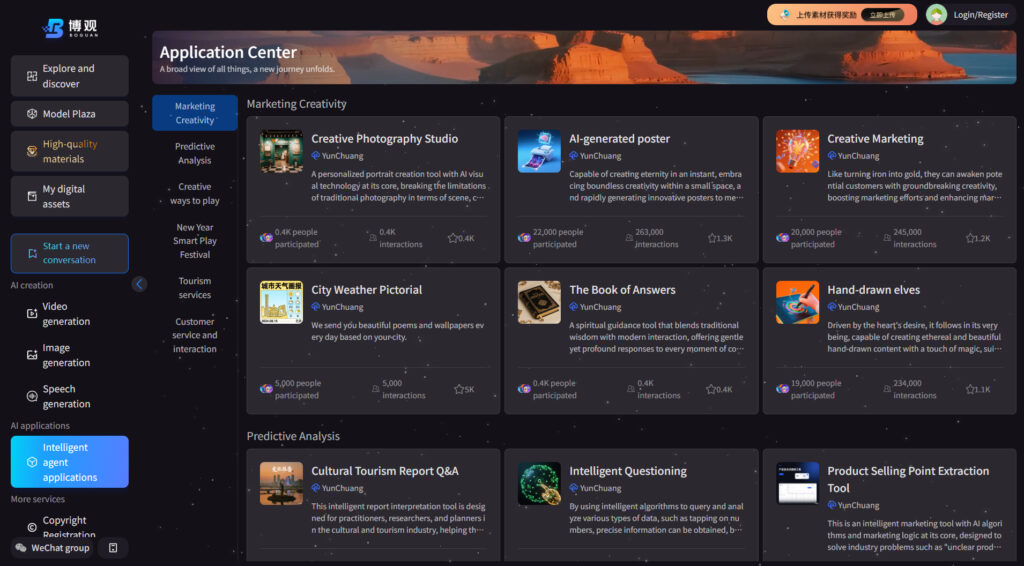
Unlike general-purpose LLMs, BoGuan has been trained specifically for cultural tourism and heritage applications. Huawei describes it as the world’s first commercial multimodal LLM designed exclusively for this sector.
The model combines Huawei’s AI computing infrastructure with an enormous cultural dataset exceeding 1.2 PB, including millions of images, videos, audio recordings, 3D models and structured historical records. The result is an AI platform capable of understanding text, images, audio and video while generating highly accurate, culturally authentic content.
Preserving Heritage Through Digital Intelligence
One of the most interesting aspects of the deployment is that AI is not replacing historians or museum experts—it is extending their capabilities.
SCG and Huawei have created a trusted cultural data platform that digitizes historical artifacts, intangible heritage and traditional knowledge while ensuring secure sharing and reuse of data.
High-quality datasets have been developed across multiple cultural categories, enabling museums, tourism operators, media companies and educational institutions to build new digital services on top of verified historical information.
The BoGuan model enables several practical applications:
- AI-generated historical videos that accurately reproduce traditional clothing, etiquette and architecture.
- Museum-grade digital reconstruction of valuable cultural relics.
- AI-assisted preservation of intangible cultural heritage.
- Creation of digital intellectual property based on historical artifacts.
- AI-assisted production of cultural tourism content and short dramas.
Rather than generating fictional interpretations, the system has been trained to maintain historical authenticity—an important requirement for cultural preservation.
Turning Ancient Relics into Interactive Experiences
SCG demonstrated how BoGuan can reconstruct historical artifacts with remarkable precision after learning from detailed records including dimensions, textures, materials and craftsmanship.
Instead of viewing an artifact behind museum glass, visitors can interact with a high-fidelity digital version through consumer applications, examining details that would otherwise remain inaccessible.
Another demonstration showed how AI combines ancient stone carvings with elements of intangible cultural heritage to generate entirely new digital cultural products while remaining faithful to their historical origins.
This illustrates how AI can help extend the lifespan and accessibility of cultural assets without replacing the originals.
AI Becomes the Tourist Guide
Beyond preservation, BoGuan is already being used to improve tourism experiences.
Out of multiple use cases, two consumer applications powered by the model really stand out.
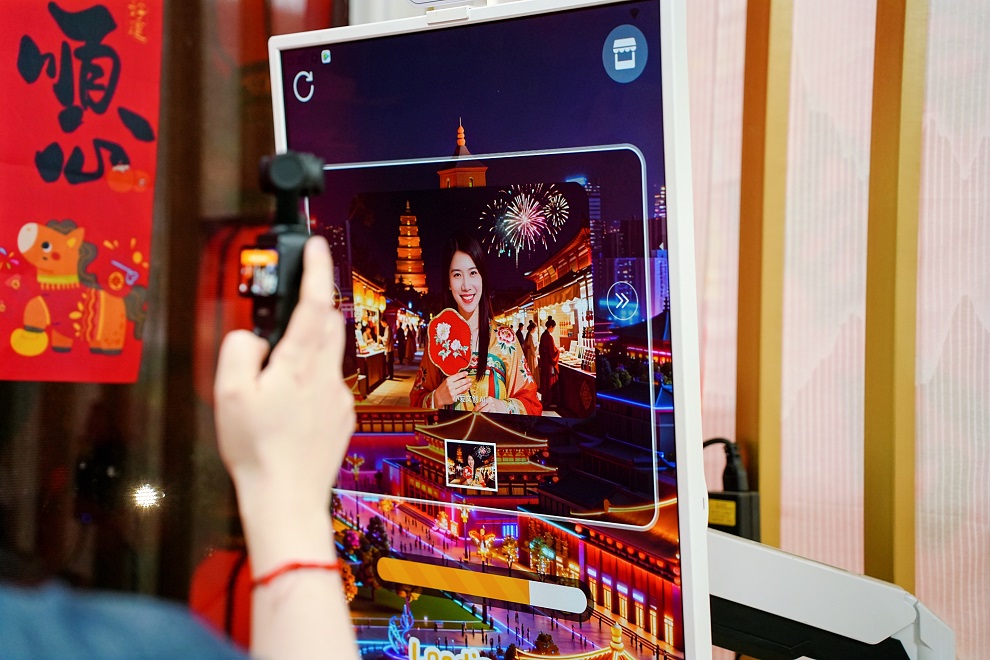
The first is an AI photography application that places visitors inside historically accurate digital scenes. Tourists can generate immersive images featuring ancient architecture, traditional clothing and historical settings within seconds.
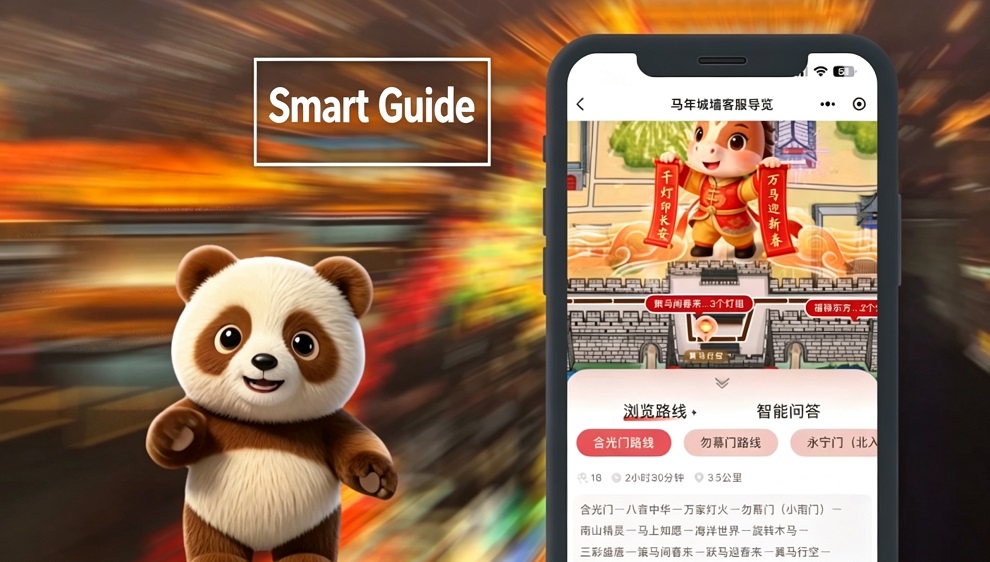
The second is an AI travel companion integrated into the Visit Shaanxi application.
Instead of simply searching for attractions, visitors can interact conversationally with an AI assistant that recommends itineraries, plans routes, answers questions and provides personalized travel guidance based on user interests.
According to SCG, the AI travel companion had already been made available to more than four million users earlier this year.
5G-Advanced: Built for Dense Tourist Environments
AI applications become significantly more useful when supported by high-performance connectivity.
That role is filled by Huawei’s 5G-Advanced deployment across the Great Tang All Day Mall (Datang Everbright City)—one of China’s busiest cultural tourism destinations.
The deployment consists of 15 macro base stations and 16 micro base stations, carefully integrated into the historical architecture without affecting the area’s visual character. The network was specifically engineered to cope with visitor peaks exceeding 200,000 people while maintaining uninterrupted connectivity.
The advanced carrier aggregation technology to deliver premium mobile broadband even in highly congested environments.
A Real-World Experience
Unlike laboratory demonstrations, the network was tested under real tourist conditions.
During the evening visit to the Great Tang All Day Mall, Teletimes conducted live speed tests while surrounded by thousands of visitors.
Despite the extremely dense environment, the network delivers peak uplink and downlink rates of 600 Mbps and 3.5 Gbps, respectively, about 10 times faster than common 5G networks. These are remarkable real-world results considering the heavy network load and demonstrate how 5G-A is moving beyond headline peak speeds to deliver consistent user experience where conventional mobile networks often struggle.
Enabling the Creator Economy
One particularly interesting aspect of Huawei’s deployment is its emphasis on uplink performance.
While traditional mobile networks have focused primarily on download speeds, today’s tourism economy increasingly depends on users uploading high-resolution videos, livestreams and social media content. The large-uplink 5G-A technology enables smooth livestreaming even from crowded attractions.
According to data shared during the tour, immersive livestreaming experiences at Grand Tang Mall have nearly doubled viewer engagement while increasing average customer spending by 62 percent, highlighting how communications infrastructure can directly contribute to tourism revenue.
More Than Smart Tourism
What Huawei demonstrated in Xi’an is not simply another AI application or another faster mobile network.
Instead, it represents an integrated digital ecosystem where:
- Cloud infrastructure manages massive cultural datasets,
- AI converts those datasets into interactive services,
- 5G-Advanced provides ubiquitous high-capacity connectivity,
- Digital applications create entirely new experiences for visitors while opening additional revenue streams for cultural institutions.
Perhaps most importantly, the project demonstrates that AI can serve not only as a productivity tool but also as a means of preserving history, promoting local identity and making cultural heritage more accessible to future generations.
For countries seeking to modernize tourism while protecting their historical assets, Xi’an offers a compelling example of how digital intelligence can enhance culture rather than replace it.