

At MWC Barcelona 2026, Huawei unveils its latest SuperPoD innovations — including the Atlas 950 SuperPoD, TaiShan 950 SuperPoD, and a comprehensive portfolio of next-generation computing solutions — to the global market. The showcase reflects Huawei’s continued commitment to open source and open collaboration, aimed at building a resilient computing foundation and offering a compelling new option for customers worldwide.
Tech innovation builds a resilient computing foundation
As AI technologies advance at an unprecedented pace, with models now reaching trillions of parameters, agentic AI is increasingly penetrating core production processes across industries. This shift is driving demand for larger-scale computing capabilities and lower latency. However, such massive models often exceed the limits of conventional horizontal scaling, where larger clusters can face reduced utilization and frequent training disruptions.
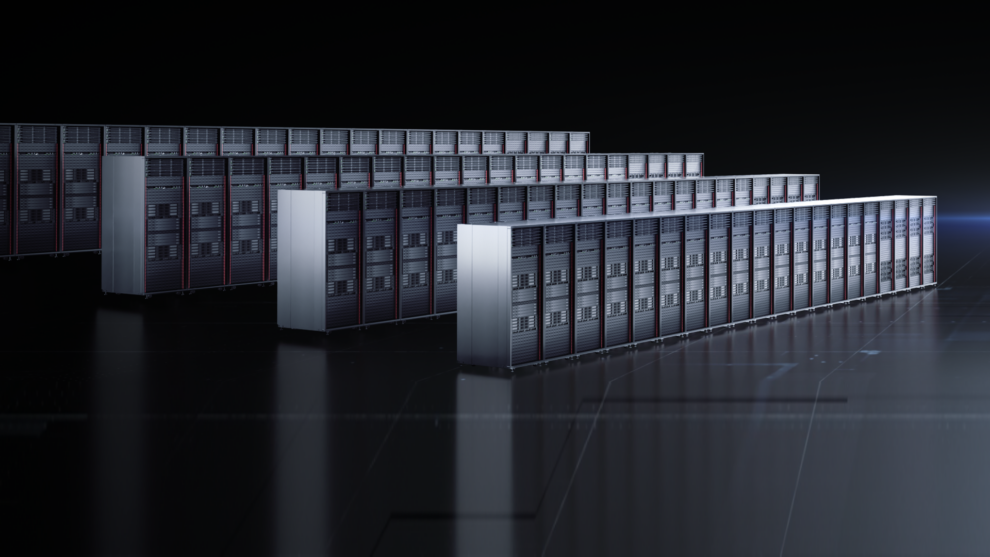
Huawei is addressing these challenges through its innovative UnifiedBus interconnect technology for SuperPoDs. The groundbreaking “cluster + SuperPoD” system architecture is purpose-built to meet rising computing demands and accelerate AI progress. At MWC, Huawei introduced its latest SuperPoD offerings to the global stage, including the Atlas 950 SuperPoD and Atlas 850E. Powered by UnifiedBus, these solutions are designed to support diverse AI training and inference scenarios.
The Atlas 950 SuperPoD, for example, connects up to 8,192 NPUs via UnifiedBus, delivering ultra-high bandwidth, ultra-low latency, and unified memory addressing. It operates as a single logical computer for learning, reasoning, and large-scale data processing.
Huawei also showcased the TaiShan 950 SuperPoD — described as the industry’s first general-purpose computing SuperPoD — alongside next-generation servers such as the TaiShan 500 and TaiShan 200. Together, these platforms provide flexible computing options tailored to workloads ranging from high to lower intensity requirements.
Open source and open collaboration drive ecosystem growth
Huawei continues to advocate for open source and open systems to accelerate developer innovation and foster ecosystem prosperity. The company plays a key role in advancing openEuler, which has rapidly emerged as one of the world’s leading open-source operating system communities. Huawei has also fully open-sourced its CANN heterogeneous computing architecture.
Through layered decoupling, software components — from operator and acceleration libraries to graph computing frameworks and programming languages — are openly accessible to developers. CANN further supports major open-source communities and projects such as Triton, TileLang, PyTorch, vLLM, and verl, enhancing accessibility, performance, and development efficiency.
As intelligence reshapes industries, Huawei remains focused on strengthening resilient computing foundations and cultivating a collaborative ecosystem — positioning its SuperPoD portfolio as a powerful new option for the AI era.