

Izhar Ahmad
In markets where critical infrastructure lacks redundancy and policy lacks consistency, periods of geopolitical tensions expose structural weaknesses. In the case of the United Arab Emirates, neither of those conditions applies. Observably, at the core of the country’s belief system is a clear recognition that telecommunications and digital infrastructure are the operational backbone that must be resilient, and that infrastructure performance is a measurable determinant of national stability even when there is some instability on international fronts.
Resilience, in the UAE ICT context, is thus not about the ability to bounce back. It is about care for citizens and the structural capacity to action a vision, remain relevant, funded, and in demand regardless of what the region around it is experiencing. It is less a defensive quality and more the natural outcome of doing things right over a long period of time. The foundation on which the country and its ICT sector rest is built with conviction, consistency, and care; all the right pillars that support the conduit of opportunities the nation is known for.
The philosophy behind the UAE’s investment culture is not purely commercial either. When the country’s leadership speaks about what the UAE is, the language is consistently one of collective belonging; one that all here share, feel, live, and work for. Regardless of origin, everyone is a part of what is being built here. HH President of the UAE has recently expressed this directly, noting that in the UAE, everyone is Emirati through their love for this land and their contributions to it. This is not diplomatic jargon. This is a profound expression of a nation’s character and its governing philosophy. It offers an insight into how infrastructure decisions get made here in the UAE for everyone, with continuity for everyone in mind. Moreover, when the President’s Eid message arrived on every handset in the country, delivered through the e& and du networks, it was a quiet illustration of something larger: The connectivity infrastructure connecting this country is treated as an instrument that weaves the national life here for those who call it home. This is a reaffirmation that the country has built and effectively utilizes its “infrastructure of care”.
A System Built to Deliver
The role of the Telecommunications and Digital Government Regulatory Authority, the TDRA, has been central to the UAE’s digital capability, prowess, and security, now increasingly augmented by the strategic oversight of the UAE Cybersecurity Council. What the TDRA has done well over the years goes beyond the traditional functions of spectrum management, licensing, or consumer protection, for instance. It has extended its remit into broader digital governance and, more critically, has maintained regulatory consistency over time. This consistency has reduced uncertainty for operators and investors alike, shortened deployment cycles for new technologies, and aligned compliance requirements with national priorities rather than allowing fragmentation across sectors. Even the upcoming discussion planned by the TDRA in collaboration with the GSMA and the SAMENA Council on 6 GHz spectrum harmonization and utilization plans around the region speaks of the UAE’s focus on countering fragmentation and fostering clarity and consistency; two key elements that demonstrate care. Care in the sense that it is not a sentiment, but an ongoing pursuit of clarity in function, sustainability in operation, and consistency in delivering on investor and citizen expectations.
The TDRA’s ongoing international engagements reinforce this credibility. The UAE hosted WRC-23 in Dubai in November 2023, welcoming over 4,000 delegates from 193 countries, and has consistently held similar host and leadership positions within the ITU’s global activities and processes as well as regional policy coordination bodies, such as the Arab Spectrum Management Group. At UNGA 2025, the Authority’s Director General delivered a powerful message addressing the global issue of developmental divide while presenting the UAE not as a regional player seeking recognition, but as a working model of what deliberate, principled digital transformation looks like at scale.
The recent pandemic period was the first real stress test of the UAE’s digital infrastructure at scale. The systems held. The platforms already in place absorbed a sudden and dramatic shift to remote work, remote government services, and remote commerce without meaningful failure. That experience was formative, not just operationally but psychologically, across both the public and private sectors. The current period of regional tension represents a different kind of test, one that shifts the requirement from scaling demand to ensuring continuity under uncertainty; a key principle on which the SAMENA Council, after consulting with the TDRA leadership, decided to hold the Leaders’ Summit 2026 despite the perceived challenges.
There is another dimension to this that we may not account for in the ICT sector analysis. Faced with direct security threats, the sovereign state has responded without hesitation and without regard to cost, because the calculations and those “interceptions” were not financial. They were moral, driven by care for the well-being of every citizen, and a conviction that the safety and continuity of life for everyone inside the UAE is non-negotiable. That same logic drives the UAE’s approach to digital infrastructure investment: Redundancy may be expensive, but continuity is non-negotiable. The mindset is consistent whether the context is national security or network resilience.
Both of these scenarios illustrate how countries that build their systems in citizen interest and to deliver rather than to impress are rewarded with faith, trust in the leadership, and the “Emirati spirit”.
Where Opportunities Now Lie
The question for industry stakeholders and decision-makers to now consider is not whether to invest in the UAE ICT sector. It is what to build on top of what already exists. A world-class fixed-line and mobile infrastructure, a thriving 5G/5G-Advanced ecosystem, with 6G under preparation, a rapidly expanding base of data centers, cloud platforms, and AI capabilities, and a stable regulatory environment continually supported by clarity and agility, and numerous other factors are all firmly in play.
The opportunities now lie in the layer above: the applications, the platforms, and the sector-specific solutions that can utilize this world-class infrastructure for delivering new services, not just for the UAE but beyond.
The UAE’s digital sector is a key pillar of support for its broader economic agenda, where national economic diversification is a key priority. Thinking in current, increasingly artificial-intelligence contexts, we see that AI-assisted logistics are making trade corridors more efficient and more competitive; digital financial services are reaching populations and business segments that traditional banking has hesitated to serve; precision agriculture is already being piloted in desert conditions; and smart energy management systems are extending the productive life of existing infrastructure while simultaneously building the data layer that the non-oil economy runs on. Visual data intelligence leveraging machine vision technology is also deployed. These are active programs, and they represent entry points for operators and investors who understand that the UAE’s digital transformation agenda has sovereign backing, long timelines, and a strong socio-political will and support.
Such support extends especially to the AI dimension. The UAE’s position is not simply that it is investing in AI. In fact, the country has committed over US$147 billion into artificial intelligence since the start of 2024. What this actually means is that it is well-positioned to deploy AI at scale for populations that currently have almost no access to frontier AI capability.
Across South Asia, the Middle East, and East Africa, within a 4,000-kilometer radius of the UAE lies a market of more than 2 billion people. This is significant and, arguably, can be considered as one of the world’s largest markets where development divides exist and which may also be the world’s largest underserved AI market. These regions have mobile connectivity. They have growing digital economies, and even 5G is either present or is starting, as in Pakistan. What several of these countries lack is trusted and secure compute infrastructure, sustainable governance frameworks, and a neutral platform from which AI services can be delivered to them at scale. The UAE can create and offer this foundation to markets within its strategic as well as physical reach.
Leveraging its AI strategy, connectivity infrastructure, digital capabilities, and international relations, the UAE has the capacity and the prowess to become the region’s data embassy, a neutral, sovereign, and trusted computational ground for governments, enterprises, and developers across some of the fastest-growing digital economies in the world. While Estonia pioneered the data embassy concept first almost a decade ago and has demonstrated that a country’s critical data and digital infrastructure can reside physically in another jurisdiction while remaining legally and sovereignly tied to the home country, the UAE is in a position to exercise prescience in this direction as well to take the concept to a new depth: The UAE is a well-governed computational ground on which the broader region’s digital economy can run. The international confidence-building experience gained over the years, whether materialized through hosting world-class industry conferences or through providing the best in class infrastructure, expertise in governance frameworks, and the nationally developed ability to offer governments and enterprises from markets with complicated geopolitical alignments the capability to route sensitive workloads through it, are key strengths that can be leveraged here in both national and regional interest.
The underlying story of the UAE digital sector is simple: Geographically a small country, holding the right vision and making the right policy and investment decisions early, attracted long-term capital of a quality and scale that few markets in the region, or the world, have seen, and demonstrated a policy vision and created a regulatory environment that the private sector continues to believe is among the most conducive in the world for serious infrastructure commitment and for new opportunities.
So far, the year 2026 is continuing with its challenges. However, the challenges have a formidable contender: the Emirates’ resilience, which in the discussed context is the outcome of cumulative system-building and a mindset that fosters and executes engagement, care, and responsibility with character. For those reading this as operators, investors, regulators, or policymakers, this is not an argument to look away from the risks in the air. It is an invitation to look at the full picture. The infrastructure is built. The compute is alive. The demand is structural and non-discretionary. Heavy AI investments are underway. The AI market within reach is perhaps the largest underserved one on earth. And the country sitting at the center of all of it has demonstrated, under real pressures, that it does not flinch and, in the words of its President, will “emerge stronger than before”.
The UAE is a market that is open, functioning, and actively shaping the digital decade ahead. The consideration for anyone with a stake in this region’s digital future is not whether to engage. It is whether they can afford to be absent from where new engagement opportunities will arise.
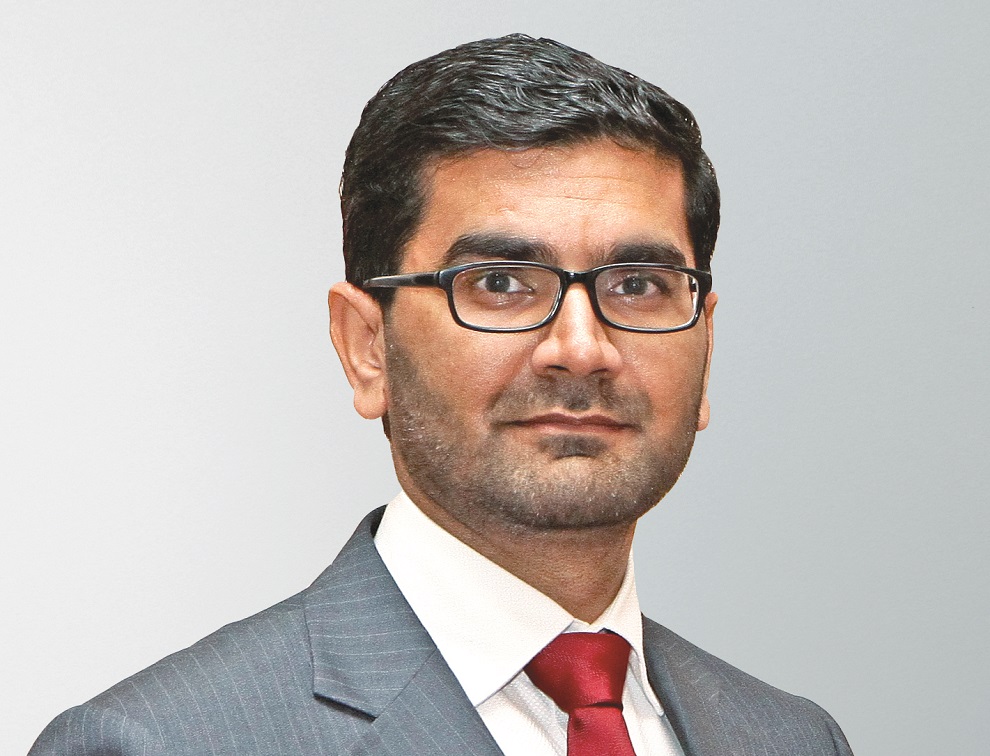
The author is a key contributor to the work of the SAMENA Telecommunications Council in support of the needs of the private sector as well as achievements of the government sector. An engineer by education, he is an inducted member of the IEEE-Eta Kappa Nu.