
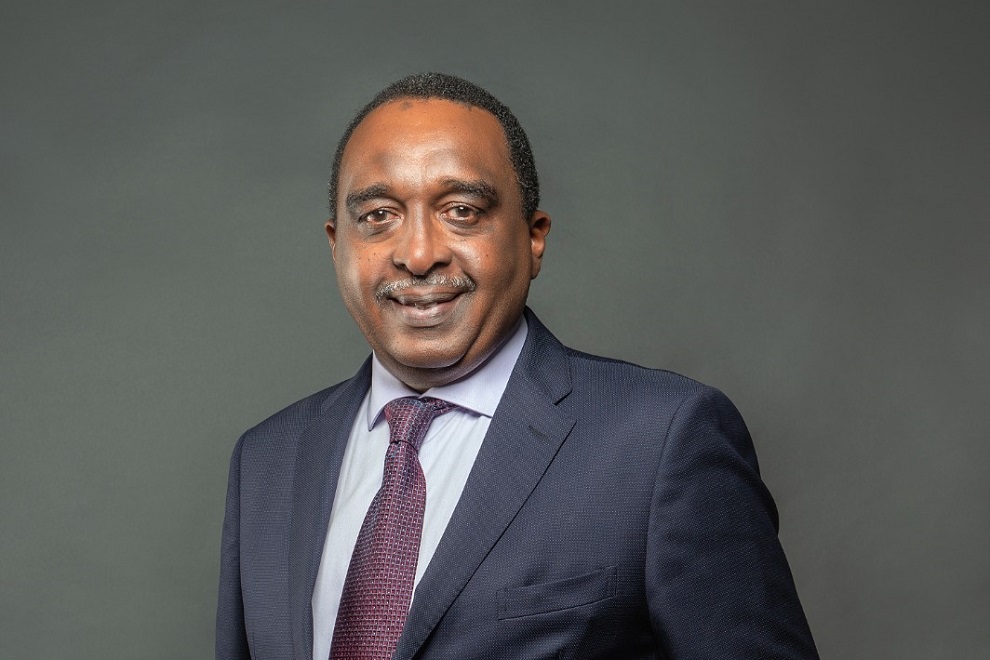

Bocar A. BA, CEO and Board Member of SAMENA Telecommunications Council, shares insights on adapting regulatory frameworks, ensuring infrastructure resilience, and navigating the great convergence of digital and space technologies
Interview: Khalid Athar
Teletimes: How would you describe the digital landscape as we move through 2026?
Bocar A. Ba: The digital landscape in 2026 reflects a period where significant infrastructure investments are maturing across the SA-ME-NA region. Over the past decade, operators have invested heavily in spectrum, fiber networks, data centers, and next-generation mobile infrastructure. These investments are now translating into networks and platforms capable of supporting governments, enterprises, and consumers reliably and at scale.
Across the region, telecom operators collectively continue to invest tens of billions of dollars annually in spectrum, fiber expansion, mobile infrastructure, and data center capacity, while modernizing networks toward 5G-Advanced and introducing AI-driven network automation and new applications. This is truly reflective of a sustained commitment by our industry to long-term digital development.
Connectivity is also expanding beyond traditional terrestrial networks. Satellite systems, hyperscale cloud infrastructure, and regional data centers are converging with telecom networks to form a resilient and integrated digital ecosystem. So, we can say that in many ways, we are witnessing a growing convergence between digital and space technologies, where satellites not only enable global communications but also support environmental monitoring, disaster response, and navigation systems that digital platforms increasingly rely upon.
“Sustaining transformation requires regulatory frameworks that are clear, stable, and supportive of long-term investment”
TT: What is required from the regulatory environment to support current transformation, especially at a time when technological innovation is accelerating and governance frameworks must also evolve more rapidly than in the past?
Ba: Telecom infrastructure projects span many years, often requiring multi-billion-dollar capital commitments. Sustaining transformation requires regulatory frameworks that are clear, stable, and supportive of long-term investment. Operators need certainty around spectrum allocation, licensing conditions, and infrastructure deployment policies, for example.
Regulations have to adapt to the emerging reality of infrastructural change. That is, as I like to say, the “great convergence” of terrestrial networks, satellite systems, cloud platforms, and AI. Policies that allow innovation while ensuring security, reliability, and alignment with national priorities are essential.
We are living in an age of acceleration where artificial intelligence is evolving rapidly, digital platforms are scaling globally at unprecedented speeds, and data flows across borders almost instantaneously. Governance frameworks therefore cannot remain purely reactive. Regulators increasingly need adaptive approaches, including collaborative policy design, regulatory sandboxes, and mechanisms that allow innovation to advance while maintaining trust and accountability.
In the SA-ME-NA region, regulators have increasingly demonstrated that engagement with industry drives better outcomes, and the SAMENA Council’s own industry leadership activities are both a witness and an enabler in this observation. Institutions such as the UAE’s TDRA are among the key supporters and providers of platforms for dialogue that align investment, policy, technology deployment, and market confidence, ensuring digital transformation remains sustainable and inclusive.
TT: Aside from regulation, on which key priorities do you see progress happening now, particularly when global connectivity gaps remain and nearly one-third of humanity still lacks reliable digital access?
Ba: I am compelled to say that Infrastructure resilience is now an utmost priority. Ensuring continuity in the communications infrastructure is essential for economic stability and public trust. Therefore, Operators are increasingly focusing on network redundancy, secure international connectivity, and robust cloud and data center operations. The convergence of terrestrial and satellite networks adds another layer of resilience, enabling service continuity even in challenging circumstances.
Another priority is advancing network capabilities. 5G-Advanced and AI-enabled networks enable new enterprise services, industrial automation, and real-time digital applications. These capabilities are critical to sustaining growth and competitiveness across the region.
Recognizably, at the same time, the global connectivity divide remains a significant challenge. However, when nearly one-third of humanity remains offline, we can objectively see that the issue cannot simply be technological only but also economic and social. The next phase of development must therefore focus on intelligent connectivity networks that are secure, resilient, and capable of transforming digital access into real opportunity for communities and economies. Fortunately, with progress in AI, numerous use-cases and new possibilities can be created to accelerate closing of connectivity and usage gaps.
“Ensuring continuity in the communications infrastructure is essential for economic stability and public trust”
TT: Who do you see as key partners in driving digital growth in the region, and how important is alignment between governments, industry, and the broader digital ecosystem in shaping innovation pathways?
Ba: Innovation today spans telecommunications, cloud infrastructure, artificial intelligence, cybersecurity, and digital finance simultaneously. For this reason, alignment between governments, industry leaders from the telecom service and network technology domains, and broader ecosystem participants is critical. Structured public–private collaboration allows standards, policies, and technology development pathways to evolve in ways that benefit the entire digital economy.
Together, all stakeholders directly help create an environment where the digital economy can grow in a resilient and inclusive manner. And it is the SAMENA Council’s role to help convene all these actors by providing timely as well as time-sensitive deliberation forums, with the intent to encourage dialogue that aligns market conditions, investment decisions, technology deployment, and regulatory policies across the region.
TT: How is the SAMENA Council evolving its partnerships to meet the demands of the region?
Ba: The SAMENA Council continues to deepen collaborations that translate into practical outcomes. Our partnerships with global industry associations and international organizations, such as the WBBA, WAA, among others, bring key subject focus and emerging technology needs and trends into regional discussions. In the context of broadband development, such partnerships are critical from both infrastructure development as well as experience-centric device and network standardization perspectives. Moreover, these collaborations also support preparation for future spectrum planning and the continued evolution of wireless and satellite-enabled networks.
Engagement with broadband, wireless standardization, and digital economy initiatives ensures that the region stays aligned with global developments as they shape the dynamics of the region and the industry. We will see this year ITU’s Plenipotential Conference, PP26, and next year WRC-27, both of which are key global activities and could have long-lasting impact on global digital development over the next five years.
TT: Cybersecurity has become one of the defining challenges of the digital age. How should governments and industry think about digital trust moving forward, especially in volatile times?
Ba: Let us first understand that when digital systems are resilient, investment and innovation flourish. When vulnerabilities undermine confidence, the entire ecosystem is affected.
Building cyber resilience therefore requires cooperation between governments, industry, and international organizations. Shared frameworks, transparency, preparedness, and coordinated response mechanisms are essential for maintaining digital trust across borders.
We can easily say that trust is the foundation of the digital economy. As societies become more dependent on digital infrastructure, cybersecurity becomes not only a technical matter but also an economic and strategic imperative that must be addressed and constantly remain a living priority.
“As societies become more dependent on digital infrastructure, cybersecurity becomes not only a technical matter but also an economic and strategic imperative that must be addressed and constantly remain a living priority”
TT: How are you addressing sustainability in the context of growing digital infrastructure, and how can digital technologies contribute more broadly to environmental monitoring and climate resilience?
Ba: With Operators investing in energy-efficient equipment, advanced cooling systems, and AI-driven network optimization that dynamically reduces unnecessary energy consumption, environmental sustainability has visibly become a critical consideration. For the SAMENA Council addressing this issue means correlating digital growth with market responsibility and promoting it as such. Operators, technology providers, and policymakers are increasingly focused on integrating sustainability into planning, operations, and investments.
Satellite systems and digital platforms now support climate monitoring, smart energy management, and more efficient resource utilization across industries, enabling technology to contribute directly to environmental responsibility. So, we see that digital technologies themselves are also powerful tools for environmental stewardship.
TT: What is the focus of the SAMENA Council Leaders’ Summit 2026, particularly as the global ICT community gathers in Dubai during a period of geopolitical uncertainty?
Ba: The SAMENA Leaders’ Summit 2026 will focus on industry leadership, market confidence, infrastructure resilience, and coordinated digital development. We see these to be the most important areas in the current contexts.
Telecom networks must continue to operate reliably, supporting economic activity, public services, and societal needs, even if geopolitical dynamics change. In such moments, in any case, demonstrating market confidence and operational stability becomes critical.
We should recognize that technology progress does not pause during periods of uncertainty. On the contrary, these are precisely the moments when dialogue and collaboration in redirecting technological progress become even more important. Dubai has long served as a trusted global meeting point for the digital industry, and the continuation of the Summit reflects the importance of maintaining cooperation and forward-looking leadership in supporting the market and its stakeholders.
Focus areas of the Summit include intelligent networks, expansion and operationalization of 5G-Advanced, convergence between terrestrial and satellite networks for resilience, growth and protection of cloud and data center infrastructure, cross-sector coordination to ensure digital infrastructure supports financial systems, logistics, government services, and enterprise platforms, and preparation for WRC-27, among other issues of relevance.
TT: Given the recent escalation in tensions between nations and its impact on regional markets, how should investors perceive the UAE investment environment, particularly in the ICT sector, and what signal should the market send about confidence and resilience?
Ba: The recent tensions in the Middle East have unsettled markets broadly, and there is no denying of this. The disruptions are clear, with investors reassessing risks.
However, it is important to separate headline-driven volatility from the underlying fundamentals of the UAE investment market. The UAE has some of the strongest fiscal buffers in the region, and this means long-term economic fundamentals of the Gulf, including the UAE, remain intact even as geopolitical risks fluctuate. This should give the ICT industry confidence.
For our industry, long-term demand drivers remain strong. Digital transformation, connectivity expansion, and enterprise technology adoption are structural trends that are fairly immune to short-term volatility. Continued investment by operators and technology providers in 5G-Advanced or “5.5G”, cloud infrastructure, AI enabled networks, and data centers, and we already know of LEO systems entering the region, all these reflect confidence in sustained market growth.
What investors and partners need to see now is stability in operations, clarity in policy direction, and continuity of strategic projects. The SAMENA Council feels that the UAE investment environment, especially in ICT, is resilient and forward looking, and that fundamental drivers of digital economy growth will remain relatively constant. Maintaining confidence requires consistent communication from industry and regulators, an emphasis on resilient infrastructure, and continued alignment of investment with national and regional digital development goals. This is a key reason why we are still aiming to hold the Leaders’ Summit at this time, and it is a privilege to do so with the patronage of the TDRA.
TT: Finally, what outcome are you hoping to see from the upcoming Leaders’ Summit, and more broadly what will determine whether this era of technological convergence ultimately benefits humanity?
Ba: The primary goal is ecosystem alignment. When regulators, operators, technology providers, and investors share a clear understanding of actual and not merely perceived risks and priorities, decision-making becomes easier and digital infrastructure becomes more resilient, efficient, and capable of supporting economic growth. I strongly believe success in this era will not be measured only by faster networks or more advanced technologies, but by the extent to which digital and space innovation expands opportunity, strengthens cooperation between nations, and contributes to a more sustainable world.