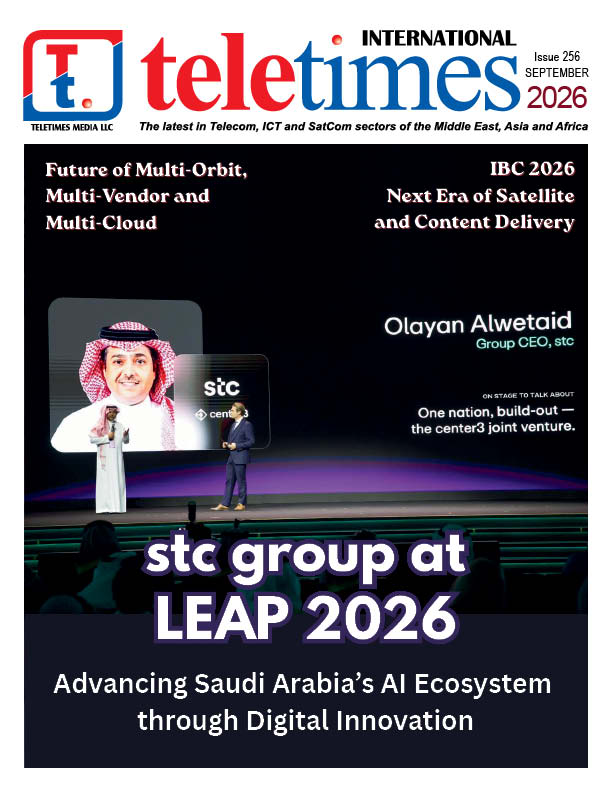


At LEAP 2026, Huawei highlights full-stack AI, intelligent connectivity, cloud and local ecosystem development to support Saudi Arabia’s AI ambitions and Vision 2030.
At LEAP 2026, Huawei reaffirmed its commitment to Saudi Arabia, outlining a clear value proposition: driving industry value through full-stack AI capabilities while laying a sustainable foundation for the Kingdom’s long-term AI development through an open ecosystem and local capacity building. This effort supports Saudi Arabia’s Vision 2030 by helping shape a smart, resilient, and prosperous future.
Saudi Arabia’s ICT market has reached US$53 billion, growing 89.5% since 2017. The digital economy now contributes 16% of GDP, while 5G coverage has reached 86%, positioning the Kingdom to move from a strong digital foundation toward the next stage of AI-driven growth. This transition requires more than AI applications—it calls for full-stack capabilities spanning connectivity, compute, cloud, and ecosystem.
Huawei continues to strengthen its key competitive advantages for the AI era. The company is advancing AI-enhanced products, including Agentic RAN, AI OTN, and AI WAN, while maintaining global leadership in core connectivity technologies such as 5G, routers, and DWDM. Huawei invests more than 20% of its annual revenue in R&D and has developed self-reliant capabilities spanning network chips, general-purpose compute chips, AI chips, storage, and optical modules. Its large-scale AI infrastructure, including Atlas SuperPoD, which supports up to 8,192 NPUs, provides customers with diverse options for AI computing. At the same time, Huawei continues to foster an open technology ecosystem through platforms such as HarmonyOS, openEuler, and GaussDB.
Building on these capabilities, Huawei is bringing together intelligent connectivity, full-stack compute, and AI Cloud as the core foundations of AI infrastructure, while working with global and local partners to accelerate the transition from AI capabilities to scaled industry applications. This will help organizations across key sectors, including government, energy, and finance, improve operational efficiency, develop new services, and unlock new sources of growth.
• In connectivity, Huawei’s AI-Centric Network provides multidimensional experience assurance, lossless networking, intelligent network autonomy, and intrinsic security and resilience to meet the evolving connectivity requirements of the AI era.
• In compute, Huawei provides large-scale, self-developed, and controllable full-stack computing capabilities, offering Saudi Arabia new options as AI workloads continue to scale.
• In cloud, Huawei Cloud provides the Kingdom’s highest-security (Class C) 3AZ public cloud nodes, ensuring that data stays within national borders and delivering low-latency response times of under 25 ms, thereby laying a robust foundation for sovereign AI and digital security.
Huawei is also strengthening its local ecosystem to support the long-term development of Saudi Arabia’s AI industry. The company works with 800+ global ISVs, 1,500+ local SIs, and 300+ delivery partners to bring together technology, industry expertise, and local capabilities. Through 30+ ICT Academies in Saudi Arabia, Huawei also supports the development of local talent, with 10,000 ICT professionals trained annually, helping strengthen the Kingdom’s local innovation and digital skills base.
Looking ahead, Huawei will continue to build on its full-stack AI capabilities, bring together an open and thriving ecosystem, and invest in local talent, working with Saudi customers and partners to move AI from applications to industry value and help the Kingdom advance toward a more intelligent, resilient, and prosperous future.