
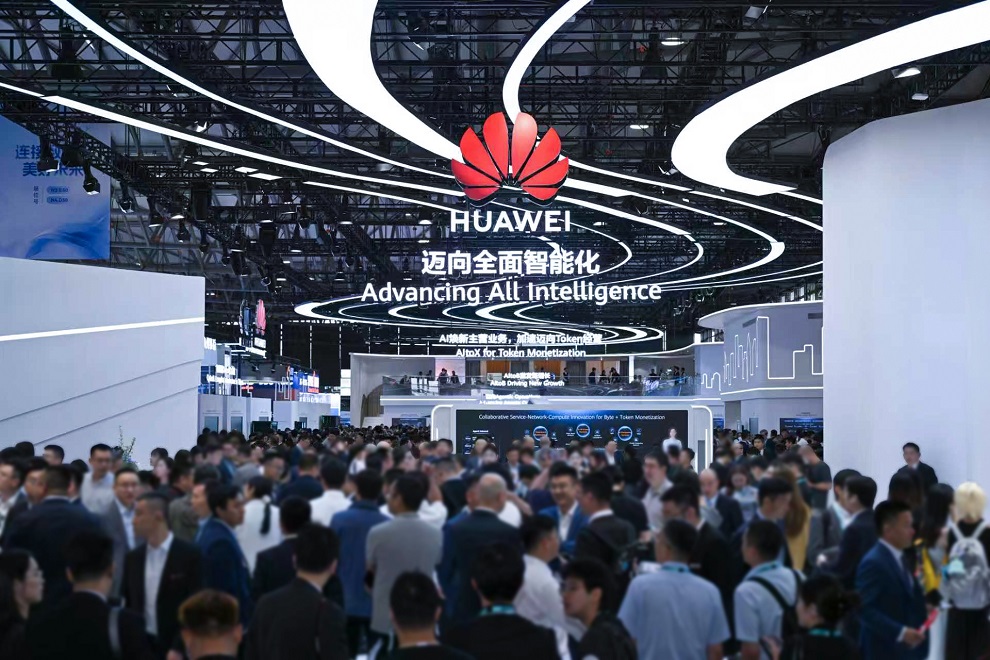

From Connectivity to Intelligent Value Creation: Wang Tao, Huawei Director of the Board and Chairman of the ICT Business Management Committee shares long term visionat MWC Shanghai 2026.
By: Gulraiz Khalid
The telecom industry has reached an inflection point. While 5G has delivered unprecedented network performance, operators worldwide continue to face pressure to generate sustainable returns on their infrastructure investments. At MWC Shanghai 2026, Huawei presented what it believes is the next commercial evolution of mobile communications: The Token Economy. Rather than focusing solely on selling connectivity, Huawei envisions operators becoming providers of intelligent digital services, where network capabilities themselves become valuable assets that can be packaged, guaranteed and monetized. Wang Tao summarized this transition succinctly: “Operators’ business models have evolved from user management, traffic management, to experience management, and further to token management.”
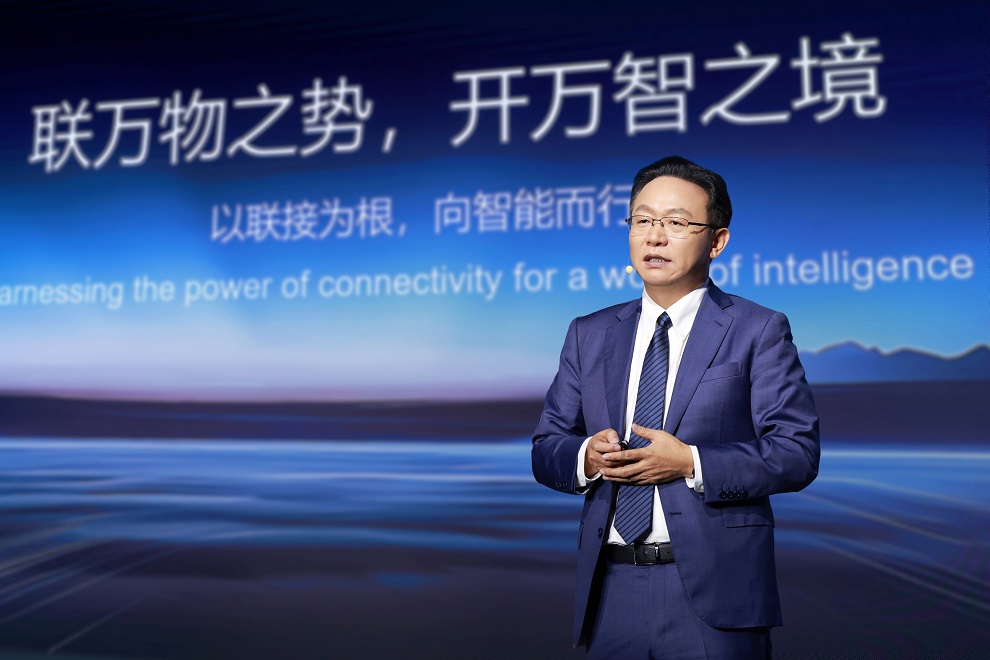
“Operators’ business models have evolved from user management, traffic management, to experience management, and further to token management.” — Wang Tao
What is the ‘Token Economy’
Unlike cryptocurrency ecosystems, Huawei’s Token Economy is a commercial framework for telecom networks. A token represents a trusted digital entitlement to a network capability or guaranteed experience. Operators could package premium latency, bandwidth, network slicing, AI services, satellite connectivity, computing resources, or security as individually priced services. The emphasis shifts from selling gigabytes to selling assured digital outcomes.
Why the Industry Needs a New Business Model
Traffic continues to grow exponentially while average revenue per user has remained relatively flat in many markets. Huawei argues that AI, autonomous systems, robotics, immersive communications, and industrial digitalization require deterministic communications that customers are willing to pay for. The company, therefore, sees the Token Economy as the commercial layer that unlocks the full value of AI-native networks.
The AI-Native Foundation
Huawei’s three-layer intelligence model consists of Network Element Intelligence, Network Intelligence and Service Intelligence. AI embedded inside radio, transport and core networks improves spectral efficiency, energy consumption, and resilience. AI also automates operations while enabling operators to launch entirely new intelligent services through an AI-native core network. Wang Tao noted that the next-generation core network will adopt an AI-native architecture with intent-based collaboration and a dedicated data and AI plane.
“The next-generation core network will adopt an AI-native architecture.” — Wang Tao
Benefits for Operators
Token Economy opens multiple monetization dimensions beyond traditional subscriptions. Huawei describes future revenues coming from ‘connectivity + traffic + slicing + satellite + computing power.’ Operators can increase enterprise revenues, offer premium consumer experiences, monetize AI services, improve operational efficiency and expand into satellite-enabled coverage and edge computing.
Benefits for End Users
Consumers gain greater control over the experience they purchase. Rather than generic data plans, users could buy guaranteed gaming latency, immersive XR sessions, premium livestream quality, secure AI services or seamless satellite coverage. Network intelligence allocates resources dynamically according to application requirements.
“Connectivity + traffic + slicing + satellite + computing power” represents Huawei’s multi-dimensional monetization vision.
Benefits for Enterprises
Industrial users require predictable performance rather than best-effort connectivity. Huawei believes future enterprise customers will be able to request guaranteed communications for factories, logistics, autonomous transport, healthcare, ports, airports and energy infrastructure. Network capabilities become promise-able, price-able and callable on demand.
Benefits for Governments
At a national level, AI-native telecom infrastructure supports digital transformation, AI strategies and universal connectivity. Huawei’s integrated space-air-ground vision combines terrestrial and satellite networks to extend coverage into remote regions, oceans and airspace while providing resilient communications for emergency response and public services.
Beyond 2030
Huawei expects mobile communications to evolve from connecting people and things to connecting intelligence itself. Future networks will support hundreds of billions—and eventually trillions—of intelligent agents, requiring ultra-high bandwidth, ultra-low latency, integrated satellite communications and AI-driven orchestration. Huawei also called for greater collaboration around U6GHz spectrum, non-terrestrial networks and common standards.
“The future value of telecom lies not in bandwidth alone, but in guaranteed intelligent experiences.”
Thinking Ahead
Huawei’s Token Economy is ambitious because it redefines the role of telecom operators. Instead of utilities that transport data, operators become trusted digital platforms capable of guaranteeing experiences, orchestrating AI and exposing programmable network capabilities. Success will depend on ecosystem collaboration, standardization, and customer demand, but the concept aligns closely with broader industry trends toward network APIs, AI-native operations and differentiated services. If 2G monetized voice, 3G monetized messaging, 4G monetized mobile broadband, and 5G monetized digital transformation, Huawei believes the next decade will monetize intelligence itself. As Wang Tao concluded in Shanghai, “Huawei is willing to join hands with the industry, taking connectivity as the foundation and advancing toward intelligence, to create the next golden decade for the mobile communications industry.” Whether described as Token Economy or intelligent service monetization, the underlying message is clear: the future value of telecom networks will be measured not simply by the data they carry, but by the intelligence they enable.