
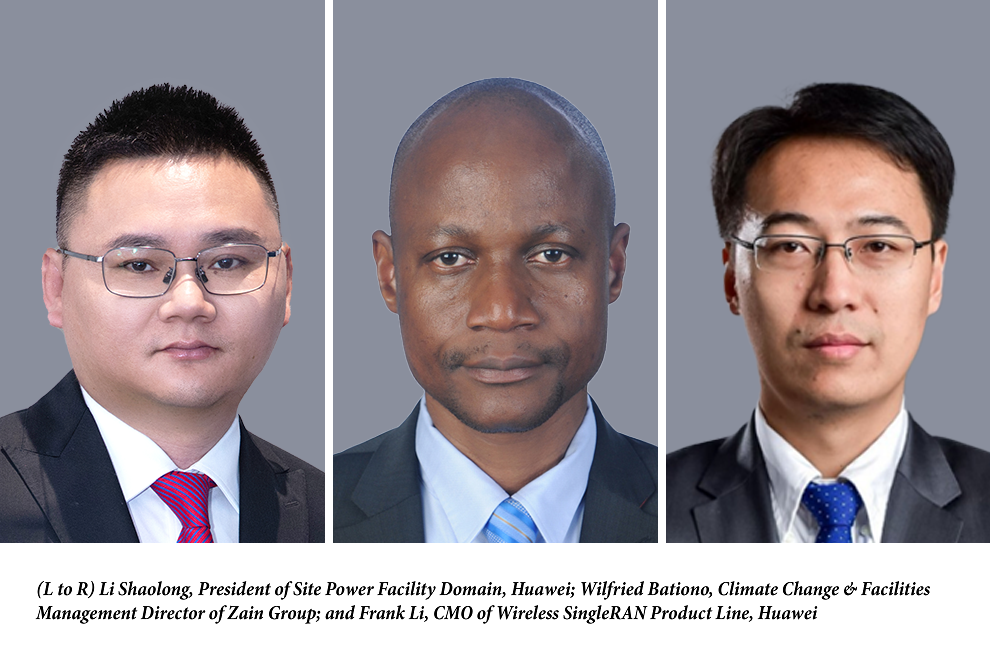

Exploring how Huawei and Zain are addressing network resilience by modernizing site energy infrastructure with smart lithium-ion batteries and AI algorithms management systems.
Gulraiz: Let’s begin with network resilience. At MWC this year, Huawei proposed enhancing site resilience, especially in light of recent outages in Spain and Portugal, Enhancing the network resilience is crucial for carriers. From the site and energy perspective, what challenges do you see affecting network resilience?
Wilfried Bationo: From my viewpoint, there are two main challenges.
First, the current network configuration poses a challenge in terms of power setup. Many MNOs still use diesel generators and large shelters with AC power, either from the grid or generators. These shelters are typically equipped with active cooling systems, often two per site, each consuming around 24,000 BTU(~7kWh). This adds a significant AC load to the site’s DC power needs, making the configuration energy-intensive and costly for operators.
Second, monitoring systems are outdated. Most sites still rely on manual monitoring, lacking remote visibility. This leads to inaccurate fault detection, repeated site visits, and increased operational and maintenance costs.
Li Shaolong: In this particular outage, many sites lacked sufficient battery capacity or had faulty batteries. They often use lead-acid batteries, which function like “dumb” devices with no monitoring capability. As a result, when disaster strikes, backup times are severely limited. Many sites around the world still use outdated equipment, often more than 10 years old. In the age of AI and 5G, these equipment’s can’t keep up pace to provide ultimate resilience.
We advice that operators must replace outdated systems. For instance, switching from lead-acid batteries to smart lithium-ion batteries enables full monitoring—voltage, SOC, SOH, current, etc.—through site management platform. Huawei’s solution, which is called NetEco management system, can proactively detect battery issues and other equipment failures. Operators can observe site energy system status and performance in real-time with NetEco, so that they can continuously improve the systems.
Gulraiz: What are Huawei and Zain doing together in this regard? Have these solutions been deployed?
Wilfried Bationo: Yes, in partnership with Huawei. We enable battery modernization by changing the legacy batteries VRLA AGM batteries (one kind of lead-acid batteries) with only 500-700 cycles and often prone to fail within a year. Lithium-ion batteries offer 4,000-6,000 cycles, dramatically increasing lifespan and backup time. Instead of 30 minutes or 1 hour, we now get 4-8 hours, which greatly improves resilience.
“Many think lithium-ion batteries are costly, but if you look at total cost of ownership, they offer big savings. They reduce energy and maintenance costs, and enable proactive issue detection.” Wilfried Bationo
Gulraiz: What kind of payback period are you seeing for lithium-ion systems?
Wilfried Bationo: Many think lithium-ion batteries are costly, but if you look at total cost of ownership, they offer big savings. They reduce energy and maintenance costs, and enable proactive issue detection. Typically, payback is under three years—faster than VRLA systems, which may take four or more.
Li Shaolong: I would like to emphasis that poor quality lithium-ion batteries are now even cheaper than lead-acid batteries, but good quality batteries offer much better performance and safety. Huawei works with top battery cell manufacturers. Huawei pays special emphasis on best cell, rigorous testing and high-quality battery management system to ensure we bring best values to customer in terms of quality and safety in entire life cycle.
“I would like to emphasis that poor quality lithium-ion batteries are now even cheaper than lead-acid batteries, but good quality batteries offer much better performance and safety.” Li Shaolong
Gulraiz: There’s risk in relying on single energy sources. Have you found certain energy types more reliable?
Wilfried Bationo: Telecom sites should always have at least two energy sources. Whether grid, diesel, or solar, batteries are essential. Recent events in Spain show that relying solely on solar with insufficient backup is risky. Proper backup time is crucial for telecom sites to guarantee critical service availability.
Gulraiz: If the battery fails without detection, are there other safeguards?
Wilfried Bationo: Standard practice involves a three-layer power structure: grid, generator, and battery. If one fails, others cover the gap. Additional sources like solar further improve resilience.
Li Shaolong: One source is never enough. Even in Europe, many sites lacked batteries and suffered during outages. Regulations are changing and operators’ requirements for network resilience are increasing such as some European operators have started designing backup systems for 8 hours. Moreover, falling costs for solar panels and lithium-ion batteries are making dual-source systems viable, even in regions with cheap fuel. Climate policies and future carbon taxes further incentivize green energy.
Wilfried Bationo: Doing nothing is risky. Most GCC countries have set Nationally Determined Contributions (NDCs) for carbon neutrality by 2050-2060. Taxation on emissions may emerge, making early green investment crucial. For Zain, net-zero targets also present an opportunity to control rising energy costs.
Gulraiz: Can you share solutions already deployed for green wireless networks?
Wilfried Bationo: We are simplifying site infrastructure using pole-mounted technologies and power amplifiers, in line with our smart site vision.
We are shifting from large shelters to smaller outdoor cabinets and pole-mounted configurations. Moving base stations outdoors significantly reduces cooling needs, cutting power consumption by up to 50%.
The future is smart sites. Network modernization and synchronization between power and wireless systems are key to energy efficiency. Smart integration between power and wireless systems prioritizes critical loads, extends backup time, and reduces energy consumption.
Frank Li: Power and network systems are increasingly integrated. As networks evolve to include 2G to 5G, the power systems must become smarter. By aligning network needs with available power through intelligent systems , we can optimize backup time and service continuity.
Intelligent systems improve OPEX by enhancing energy efficiency and operations. Huawei’s Ambient Sites manage base stations, batteries, and even passive components like antennas, making them actively monitored. Unified management and intelligent algorithms allow faster fault resolution and predictive maintenance.
For Huawei, we help operators build green networks from three levels. Firstly, equipment like Huawei’s metaAAU platform can achieve “0 Bit 0 Watt,” reducing consumption during idle periods by 30%. Secondly, site-level integration with power systems supports efficiency. Thirdly, network-level multi-objective optimization enables scheduling and smart load shifting even during busy hours. Together, this creates dynamic, responsive, and greener networks.
“Intelligent systems improve OPEX by enhancing energy efficiency and operations. Huawei’s intelligent algorithms manage base stations, batteries, and even passive components like antennas, making them actively monitored.” Frank Li
Gulraiz: As mentioned earlier, intelligent technology can help sites reduce energy consumption through synergies, extend backup power, and increase network resilience. What other value can it bring?
Li Shaolong: Power systems are evolving from simple suppliers to revenue-generating assets. In Europe, telecom operators now use site batteries in Virtual Power Plants (VPPs), participating in the energy market. In Africa, operators sell solar energy from sites. With intelligent breakers, backup times can be tailored per user, allowing different business models and monetization. We believe that site intelligence can enable operators to transform from energy consumers to energy prosumers, and increase revenue.