

As digital transformation accelerates across the Gulf, the conversation around cybersecurity, digital sovereignty, and AI governance has never been more crucial. Huawei, one of the region’s leading ICT provider, has been at the forefront of this dialogue—enabling governments and enterprises in secure digital transformation.
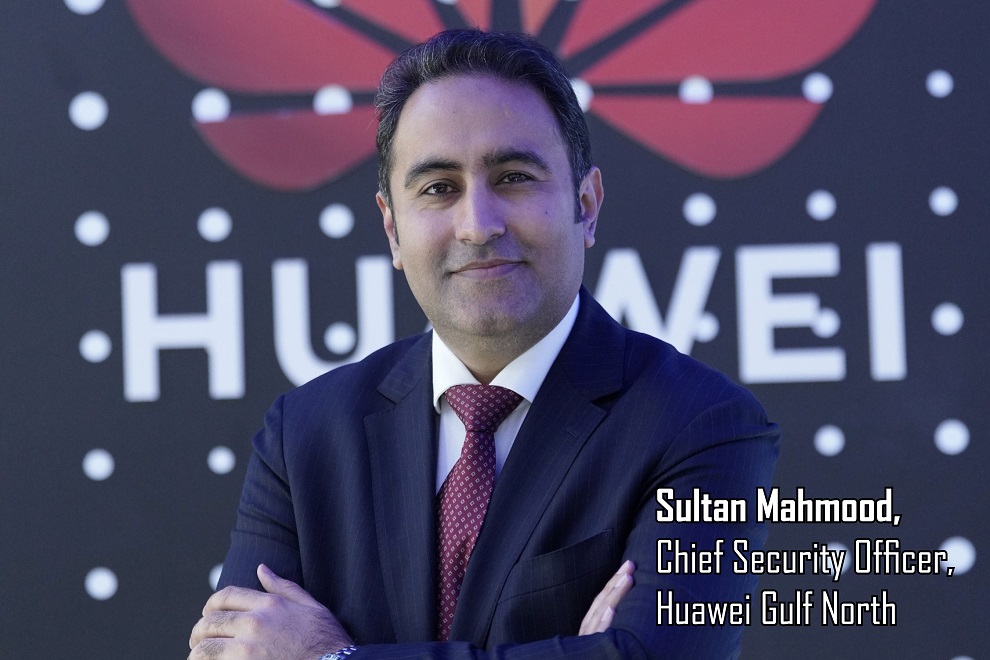
In an exclusive interview with Teletimes, Sultan Mahmood, Chief Security Officer at Huawei Gulf North, discussed Huawei’s holistic approach to cybersecurity, the company’s evolving AI strategy, and how quantum computing would be shaping the next era of secure digital infrastructure.
Safeguarding National Data Sovereignty
“Data is the new oil,” Sultan begins, firmly emphasizing the significance of protecting national data as a cornerstone of digital progress. “Each country must safeguard its data to ensure sustainable digital economic growth. At Huawei, we fully respect national sovereignty and local data residency regulations.”
Huawei’s operations adhere to strict data governance framework, ensuring that personal data remains protected according to local privacy laws. “When it comes to personal data processing, our position is very clear—it’s a strict no unless its explicitly in compliance accordance with local laws, Data subject consent and is limited to legitimate business purpose only” he clarifies.
Central to this commitment is Huawei’s Cybersecurity and Privacy Protection Framework, now in its third iteration as of 2025. The framework consolidates the requirements of governments, customers, and industry regulators to ensure that cybersecurity and compliance are embedded in every function by design and at every organizational level—from headquarters down to regional and to frontline teams.
“The purpose is simple,” Sultan explains. “To deliver most reliable and trustworthy products by design, and ensuring compliance by integrating governance & operation into a single, transparent cybersecurity framework.”
Navigating Cybersecurity in a Cloud-Native Era
As telecom operators move toward software-defined and cloud-native architectures, cybersecurity dynamics are evolving rapidly.
“Being software-defined is fundamentally a good thing,” Sultan remarks. “It enables agility and efficiency—but it also introduces new risks. Huawei’s philosophy is secure by design. Before implementation, we assess what threats could exist, model how they might be exploited, and proactively mitigate them.”
This “evaluate before you implement” principle ensures that every Huawei solution—from core networks to enterprise applications—remains resilient as technologies advance. Whether it’s AI-driven networks or software-defined infrastructure, Huawei embeds cybersecurity at every layer of development and deployment.
AI: Empowerment with Responsibility
Artificial Intelligence is revolutionizing cybersecurity—but also introducing new risks. “AI is a powerful tool, but its not a silver bullet,” Sultan notes. “Threat actors are increasingly using AI to enhance cyberattacks. Enterprises must, therefore, implement AI carefully, ensuring compliance with local laws and ethical norms.”
He explains Huawei’s layered responsibility model for AI adoption:
- Vendors, such as Huawei, design AI systems according to international standards and best practices.
- Service providers must localize these systems, training them with local data to ensure compliance with local culture and regulations.
- Regulators then enforce frameworks for responsible AI deployment.
“For example, an AI model trained outside the Gulf may not align with local cultural or religious values,” Sultan says. “Enterprises must adapt AI models locally—ensuring both performance and compliance.”
AI Everywhere: Building Autonomous Networks
Reflecting Huawei’s 2025 theme, “All Intelligence,” Sultan describes how AI is integrated across all Huawei solutions.
“At our booth in GITEX Dubai this year, every solution has an AI element,” he says. “Our AI-powered solutions can detect network performance degradation early, enabling proactive action without impacting data privacy.”
Huawei is also embedding AI into autonomous digital networks, capable of optimizing themselves in real time. “Even user behavior analytics and deep relationship analysis are now AI-driven,” Sultan adds. “This means earlier detection of anomalies and stronger network resilience.”
Every AI feature, he reiterates, is built on Huawei’s secure-by-design foundation — ensuring that customers can adopt intelligence safely and confidently.
Quantum Computing: The Next Frontier
When asked about the next major leap in technology, Sultan points to quantum computing. “Quantum computing will completely change how we approach problems,” he says. “But it also brings new challenges, especially to cryptography.”
Quantum computers could theoretically break cryptographic algorithms once considered unbreakable. Yet, Sultan remains optimistic. “Every challenge brings an opportunity,” he asserts. “Global standardization organizations like ISO, are already working on post-quantum cryptography—ensuring we remain prepared for that era.”
Road Ahead: Trust as the Core of Transformation
For Huawei, cybersecurity is not an afterthought—it is the foundation of digital transformation. Under Sultan Mahmood’s leadership, Huawei Gulf North is reinforcing this principle across the region, ensuring that innovation, compliance, and trust evolve hand in hand.
“Technology will keep advancing,” Sultan concludes, “but our foundation will always remain the same: security, privacy compliance, and customer trust.”