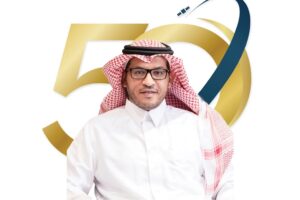

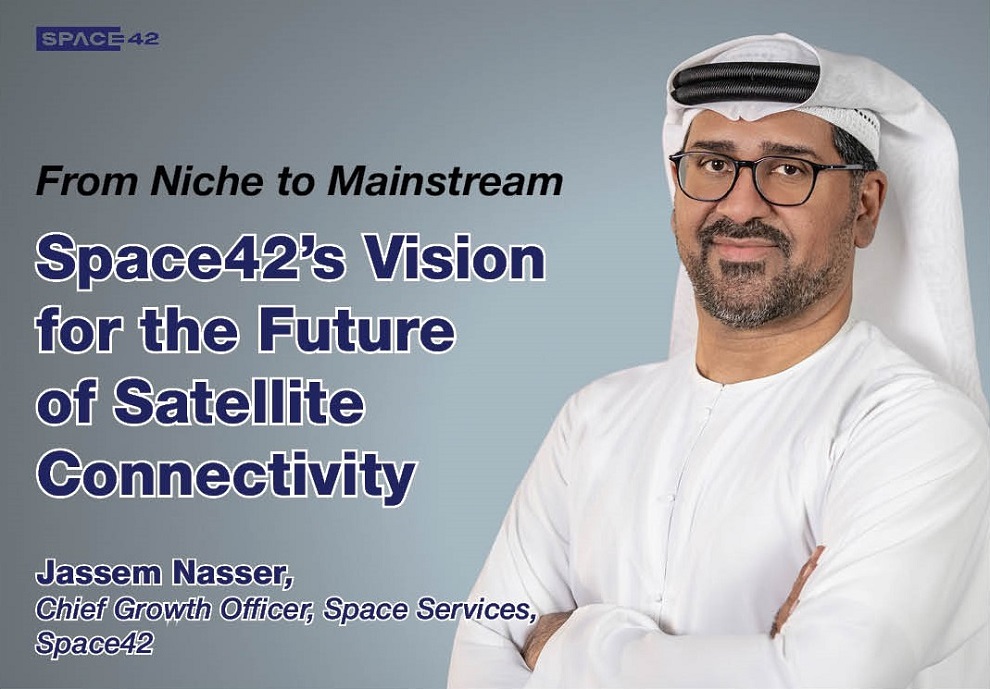

Jassem Nasser, Chief Growth Officer, Space Services, Space42
Teletimes: How do you see the satellite connectivity market evolving today, and which trends will have the greatest impact on commercial growth over the next three to five years?
Jassem Nasser: Satellite connectivity is moving from a standalone service targeted at niche markets, toward a long-term, integrated layer of the mobile network. 3GPP Release 17 established standards for Non-Terrestrial Networks (NTN), creating a common framework through which standards-compatible smartphones and other devices can access terrestrial and satellite networks without modification. By 2029, commercial growth will depend on translating that technical convergence into services that can operate at mobile-market scale.
Three factors will be critical: interoperability between terrestrial and non-terrestrial networks, a simple and seamless commercial model for end users, and improved economics for delivering space-based services. Together, these factors will determine the pace at which satellite connectivity transitions from niche applications to mainstream adoption within the telecommunications industry.
TT: Space42 brings together satellite communications, geospatial intelligence, and AI capabilities. How are you translating these capabilities into new commercial opportunities and scalable services across global markets?
JN: Space42 is a multifaceted organization offering integrated solutions to industries across energy, maritime, emergency response, telecommunications, and other business segments. Customers, in particular enterprises and government entities, need to maintain communications across remote operations, monitor changes across a large geographic area, or make sense of complex datasets efficiently. Space42 by leveraging its various capabilities is positioned to best advise and provide the necessary operational and business support to these customers.
Satellite communications provide the connectivity layer, geospatial intelligence provides situational awareness, and AI accelerates the conversion of data into actionable insights. The commercial opportunity is to turn that combination into repeatable services that address common operational challenges across sectors and markets. We therefore tailor solutions for our customers to support growing their business, achieve cost savings and create sustainable business models.
Scaling our capability is not a siloed effort. Take for example the upcoming Direct-to-Device (D2D) venture with Viasat, Equatys. In building the shared infrastructure platform, we will be drawing from established commercial relationships with more than 400 mobile operators worldwide. To further our Earth Observation capabilities, our AI-powered geospatial intelligence platform GIQ, draws inputs from multiple third-party data providers and proprietary AI models, to ensure an accurate understanding of ground conditions.
“The commercial opportunity is to turn that combination into repeatable services that address common operational challenges across sectors and markets”
TT: Which markets and customer segments do you see offering the strongest growth opportunities for Space42, particularly across the Middle East, Africa and emerging markets?
JN: The government segment remains the largest, offering significant long-term opportunities for space-based connectivity and intelligence solutions. This includes applications for national connectivity, secure and sovereign communications, infrastructure resilience, and backup communications.
Following this, the maritime industry is typically the second largest in terms of satcom opportunities, however we are seeing growing demand from the enterprise market, specifically across key sectors such as energy, mining, and civil defense for satcom as well as geospatial intelligence products.
Geospatial intelligence can support infrastructure, energy, agriculture, environmental monitoring, and mobility, where timely information translates directly into better operational and economic outcomes. We see significant potential for these sectors across Africa and other emerging markets.
We assess these opportunities through local demand and market conditions rather than geography alone. Our technical capabilities as well as spectrum and market access across more than 160 countries provide us with extensive potential reach. Turning that reach into commercial activity requires the right licensing, distribution channels, and local expertise.
Our approach is therefore partnership-led. We combine global technology and infrastructure with partners that understand their markets, regulatory environments, and customers. Looking at our Space Services business alone, we operate through 146 active service partners across different markets.
TT: Equatys introduces a shared-infrastructure model for satellite-enabled connectivity. How could this approach change the economics of deploying and operating satellite services?
JN: Equatys is being established as an independent, neutral shared space and ground infrastructure platform. Its Tower Company model applies a familiar terrestrial construct to space. Licensed operators can use common infrastructure rather than financing separate global systems, while retaining their spectrum rights, customers, and commercial relationships.
The economic logic is based on sharing the cost of infrastructure across multiple participants and making more efficient use of assets and spectrum. As participation increases, asset utilization improves supporting densification of the infrastructure and hence growth of the overall ecosystem. The scaling of this system and participants results in better economics to serve a broader base of operators and customers.
“Equatys has the potential to become an important growth platform for Space42 by connecting our global spectrum position, decades of industry experience, and strong industry relationships, with an established route to the mobile market.”
The architecture is also designed to expand as demand develops and incorporates new technology over time. Together, these characteristics are intended to move satellite connectivity closer to the economics required for mass-market adoption. These benefits remain forward-looking and depend on successful formation, deployment, and ecosystem participation.
TT: Could shared satellite infrastructure help operators expand coverage and capacity more quickly, particularly in markets where the economics of dedicated infrastructure have traditionally been challenging?
JN: For mobile operators, the shared model provides a different route to satellite-enabled expansion. Rather than investing in and operating a dedicated satellite system, an operator could access common space and ground infrastructure while retaining its spectrum rights, customer relationships, and commercial proposition.
This changes the investment equation in markets where demand for additional coverage exists but may be insufficient to justify a standalone constellation or terrestrial expansion. It also allows the mobile operator to remain at the center of the customer relationship.
For the end user, the longer-term objective is seamless service continuity. When terrestrial coverage ends, the satellite layer extends the operator’s network experience without requiring the customer to manage the transition between networks.
Equatys is our intended solution to this need. A choice and independence enabling multi-participant approach encourages price competition and innovation, while reducing the risk of significant market power that distorts level playing fields.
TT: Looking ahead, what role do you expect Equatys to play in Space42’s broader commercial growth strategy, and what will be important in taking the model from concept to deployment at scale?
JN: Equatys has the potential to become an important growth platform for Space42 by connecting our global spectrum position, decades of industry experience, and strong industry relationships, with an established route to the mobile market.
Together, Space42 and Viasat have commercial relationships with more than 400 mobile operators. Equatys creates a pathway through which those relationships can support broader D2D and advanced mobile satellite services.
The focus now is execution. Formation of the venture, constellation procurement, and the corresponding definitive agreements remain subject to customary closing conditions, including regulatory approvals. From there, the priorities are to bring the initial system into service, establish the operating model, and create the conditions for additional operators, spectrum licensees, and strategic or financial participants to join the platform over time.