
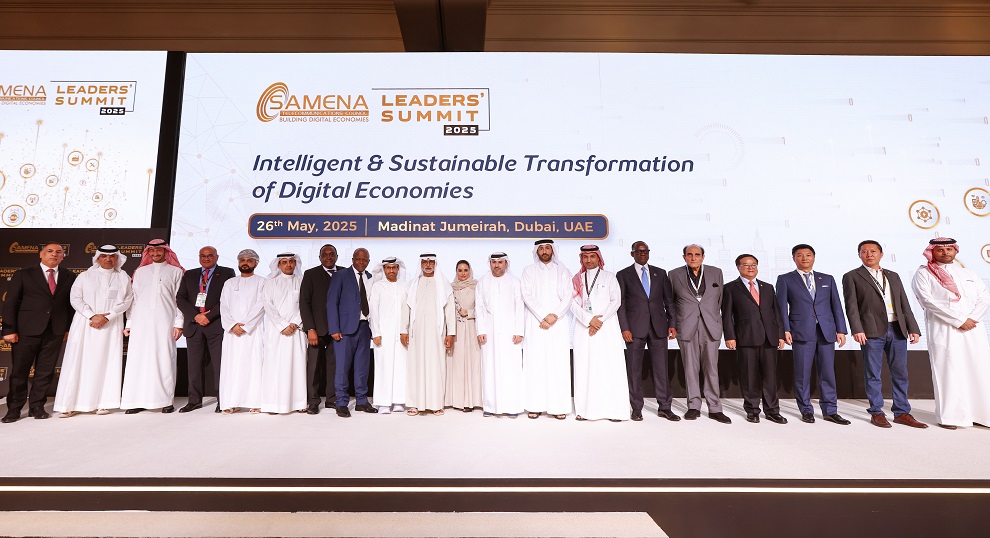

Held with the patronage of the UAE Telecommunications and Digital Government Regulatory Authority (TDRA), the SAMENA Council Leaders’ Summit 2025 recently convened in Dubai, reaffirming a shared commitment to advancing intelligent, inclusive, and sustainable digital transformation across the South Asia–Middle East–North Africa region.
Hosted by the SAMENA Telecommunications Council at Madinat Jumeirah, the Leaders’ Summit brought together a high-level assembly of global policymakers, regional regulators, technology leaders, and digital economy stakeholders to address the evolving needs of next-generation communications networks and to build regional consensus on the future of digital growth.
Organized under the umbrella theme “Intelligent & Sustainable Transformation of Digital Economies,” this year’s Leaders’ Summit marked a turning point in the region’s collaborative efforts to scale digital capabilities. As countries embrace advanced 5G networks, AI-powered capabilities and services, and more responsive infrastructure, the Summit provided a practical and forward-looking agenda shaped around infrastructure modernization, policy innovation, investment in resilient networks, and long-term value-creation for digital societies.
The event opened with keynote messages from key international and regional leaders including TDRA, Huawei, the International Telecommunication Union (ITU), South Africa’s Department of Communications and Digital Technologies (DCDT), the Digital Cooperation Organization (DCO), the World Broadband Association (WBBA), and ZTE. A Memorandum of Understanding was signed between the WBBA and the SAMENA Council to further cross-industry collaboration. The Summit was honored by the presence of H.E. Sheikh Nahyan Bin Mubarak Al Nahyan, UAE Minister of Tolerance and Coexistence, who was the Guest of Honor and delivered a powerful keynote reflecting the region’s ambition to lead in digital advancement with unity and purpose. The Guest of Honor stated: “The SA-ME-NA region must respond with agility and determination; strengthening local innovation ecosystems, building resilient infrastructure, and forging new partnerships that secure our place in the future digital order.”
The Leaders’ Summit 2025 served as a high-impact platform to examine immediate challenges and define actionable strategies across several key domains:
- Space and Digital Connectivity: With WRC-27 on the horizon, discussions focused on the role of satellite and non-terrestrial networks in extending connectivity and strengthening digital resilience.
- TDRA-Chaired Multi-TRA Forum: Regional regulators and UAE government bodies came together to explore ways to improve digital service delivery by utilizing 5G and 5G-Advanced infrastructure.
- Techco Transformation & 5G-A Leaders’ Forum: Operators and technology leaders explored how intelligent networks and AI-based services are reshaping business models and driving new monetization opportunities.
- Cybersecurity & Governance: Dedicated roundtables examined the new realities of governing AI systems, strengthening cyber resilience, and making connectivity more inclusive and secure.
- Digital Policy & Ecosystem Enablement: Stakeholders addressed how to balance innovation with affordability, competition, and long-term sustainability in the digital economy.
The SAMENA Council Leaders’ Summit also encompassed the 9th Global ICT Energy Efficiency Summit hosted by Huawei where experts addressed the urgent need to align digital infrastructure growth with climate objectives. Discussions centered around building energy-smart networks, promoting green infrastructure design, and ensuring safe, scalable power solutions for the ICT sector, and promoting AI applications in the digital energy infrastructure industry to drive industrial development.
In a special closed-door session, a preparatory G20-centric roundtable brought together representatives from G20 and non-G20 countries, with a particular focus on regional contributions and policy priorities ahead of South Africa’s G20 presidency in November 2025. The G20 Roundtable was co-chaired by Smart Africa, representing the African vision for a digitally powered Africa, and by DCO, which presented the Digital Economy Navigator (DEN) as a tool for digital policymakers to advance ICT maturity across the region. This special roundtable was planned, organized, and facilitated by the SAMENA Council to help support exchange of insights among G20 and non-G20 member countries and their stakeholders.
Beyond the formal sessions, the Summit enabled strategic networking and knowledge exchange, serving as a meeting ground where national priorities met global perspectives. It highlighted region-led digital achievements while strengthening partnerships across sectors.
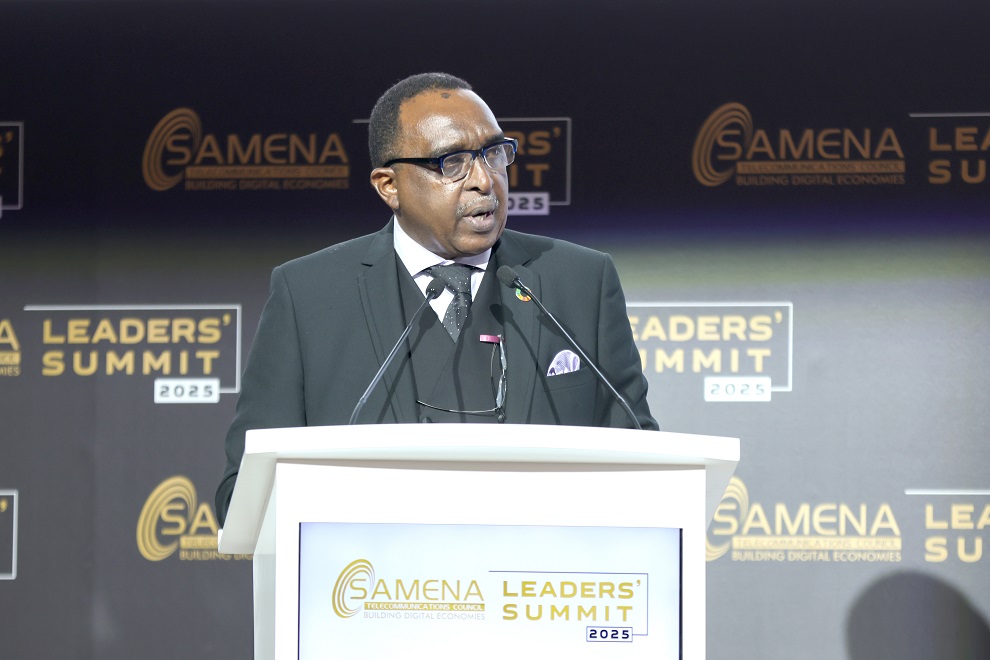
In his keynote remarks, Bocar A. BA, CEO of the SAMENA Telecommunications Council, stated: “Infrastructure is no longer just about access. It’s about intelligence, energy efficiency, and service relevance. The Leaders’ Summit is not just a platform for dialogue; it is a tool for execution, for alignment, and for ensuring that regional cooperation becomes a lived reality. We must act together, with shared priorities and purpose.”
The SAMENA Council extended its gratitude to the Summit’s key supporters and partners, including:
- Chief Patron: TDRA UAE
- Global Collaboration: ITU
- Chair Sponsor: stc Group
- Host Sponsor: Huawei
- Platinum Sponsor: Mobily
- Gold Sponsor: ZTE
- Industry Development Partner: World Broadband Association (WBBA)
- Strategic Partner: 7Generation
This strategic cooperation and industry stakeholders’ support reflected strong industry confidence in the Leaders’ Summit’s mission to foster public-private coordination in building digital ecosystems that are efficient, inclusive, and future-ready. As the event concluded, a clear consensus emerged that the region’s digital future depends on decisive execution through collaborative governance, inclusive innovation, and continuous alignment between Regulators, Service Providers, and Ecosystem Enablers. Telecom Operators must evolve into technology companies (“Techcos”) by leveraging AI and intelligent infrastructure to deliver new kinds of value, with agility and foresight.
Key Insights from the Leaders’ Summit 2025
Leadership and Policy
The Leaders’ Summit opened with a strong reaffirmation that digital transformation must be grounded in values, shaped by inclusive governance, and driven by outcomes that reflect societal priorities. Bocar A. BA emphasized that progress must be measured not by technological sophistication alone, but by its contribution to people, communities, and sustainable growth. He called for public and private collaboration to go beyond statements and move toward long-term commitments that build trust and deliver real change. Other high-level voices reiterated the importance of aligning national and regional agendas, and cautioned against over-dependence on technology without developing digital and emotional intelligence. The UAE’s Cybersecurity leadership reinforced the urgency of preparing for a security environment where AI threats move faster than traditional defenses, requiring stronger coordination and regulatory anticipation. Meanwhile, the UAE Minister of Tolerance spoke of digital transformation as a social endeavor, encouraging the industry to treat trust, ethics, and inclusion not as afterthoughts but as design principles from the classroom to the boardroom.
Africa’s Digital Priorities and G20 Engagement
South Africa’s Deputy Minister offered a clear picture of Africa’s priorities under its G20 presidency. The region is focused on creating affordable access, developing public digital infrastructure, nurturing MSME innovation, and shaping data governance that serves both fairness and growth. It was highlighted that G20 outcomes must take into account the voices of non-G20 countries, especially when forming global technology frameworks. This corroborated the rational for the SAMENA Council to facilitate the G20 preparatory meeting during its Leaders’ Summit 2025, and these reflections set the tone for the G20 Inter-Ministerial Roundtable, where leaders from across regions discussed how to close the gap between policy ambition and practical execution. Several participants noted that while many strategies exist on paper, actual delivery remains weak. To correct this, governments and industry must coordinate on investment, regulation, and skills, while also reducing friction caused by overlapping rules across sectors such as health, environment, and urban planning. A predictable, open policy environment was highlighted as essential for securing long-term investment.
Telecom Industry and Technology Evolution
A major focus of the Leaders’ Summit was the telecom sector’s transformation into a broader digital enabler. Conversations in the Telco to Techco Forum revealed a growing consensus that operators must go beyond connectivity and evolve into service platforms that integrate cloud, AI, and localized partnerships. This shift is being driven by changing user expectations and the need to unlock new value through applications, not just infrastructure. In the business-focused discussions, operators like Mobily and Salam KSA stressed the need for new revenue models that link services to network reinvestment and energy efficiency. Participants discussed how business growth now depends on diversifying digital offerings and becoming part of the services ecosystem. Regulatory flexibility was also emphasized, especially by Cyprus’ telecom authority, who shared how the country is phasing out 3G while preserving 2G for essential services.
Policy Implementation and Regional Investment
The Leaders’ Summit brought clear acknowledgment that connectivity progress requires much more than technology. It depends on intelligent use of technologies, harnessing network capabilities, harmonized regulation across spectrum, taxation, trade, and cloud services, as well as policies that reflect local contexts. The call for regional alignment on these issues was echoed throughout, especially in the Multi-TRA Roundtable hosted by TDRA. Regulators and industry leaders from across the region shared national approaches to spectrum policy, smart infrastructure, and digital readiness. Bahrain and Turkey presented best practices on enabling infrastructure access and municipal collaboration. Salam KSA made a case for revenue-sharing frameworks that include contributions from digital platforms. Several countries flagged the urgency of enabling affordable spectrum and reducing permitting bottlenecks. INFRA X and other technology partners demonstrated how 5G infrastructure is already supporting smart utility services, and discussed how such innovations can scale with forward-looking regulation.
Energy Efficiency and Sustainability
Sustainability was woven into nearly every session, not as an optional feature but as a core design requirement. At the Global ICT Energy Efficiency Summit, speakers called attention to the rising energy demands of digital networks. From spectrum allocation to data centers, energy efficiency must be embedded from the start. Mobily and other industry leaders discussed how linking services to green incentives can drive both innovation and responsible growth. The Summit reinforced that energy management is no longer just about cost—it is about environmental accountability and long-term viability.
Broadband as a National Asset
Broadband is no longer just a utility but a foundational enabler of national digital policy. The UAE’s example, highlighted by TDRA, showed that long-term investment and coordinated strategy have resulted in one of the world’s highest fiber penetration rates and fastest average speeds. More than performance alone, broadband has become central to delivering services in education, health, urban planning, and economic resilience. For countries looking to transform their digital economies, fiber has proven to be the decisive first step.
From Infrastructure to Intelligence
Speakers, including Huawei and e& UAE, emphasized how AI is now central to the network fabric. Broadband, cloud computing, and AI are merging into a single infrastructure layer. The future lies in intelligent broadband and networks that can adjust in real-time, learn from usage, and adapt capacity based on applications, user needs, or energy considerations. With AI and parallel computing driving new traffic demands, optical networks will need to be treated not just as transport systems but as responsive service environments.
Toward Smarter Networks and User-Centric Growth
Growing the user base and improving broadband quality is not just a matter of coverage. Strategies shared by Zain and Huawei focused on setting bold national targets, ensuring wholesale access to infrastructure, and incentivizing both network expansion and service innovation. AI-powered platforms were seen as crucial to improving user experience, supporting predictive maintenance, and enabling the launch of new digital services that go beyond traditional connectivity.
Leaders’ Summit 2025 Impact & Closing Analysis
Across all panels and sessions of the SAMENA Council Leaders’ Summit 2025, one message was clear: The future of digital economies depends on cooperation that extends across sectors, borders, and disciplines. There is no substitute for trust built through transparency and sustained partnership. Digital skills remain a critical constraint, especially in countries that have rolled out infrastructure but lack the human capacity to fully use it. Participants called for more investment in training, experimentation, and practical testbeds to ensure new technologies deliver tangible benefits. Municipal collaboration was recognized as vital for the rollout of 5G and future networks, with urban infrastructure often being the key barrier or enabler. Whether in cybersecurity, regulation, or infrastructure investment, the conversations consistently pointed toward a shared recognition: strategy must now turn to execution.
The SAMENA Council CEO’s words summed up the Leaders’ Summit’s impact and the needs of the future: “Our digital future will be shaped by the decisions we take today in how we lead, how we collaborate, and how we invest in building societies that are empowered by technology, not overwhelmed by it. The Leaders’ Summit 25 is a reflection of that responsibility, and of our collective ambition to get it right. The future of our digital societies will not be authored by technology alone, but will be defined by how wisely we govern, how inclusively we build, and how responsibly we lead.”